Wells
Iron and Manganese in Well Water
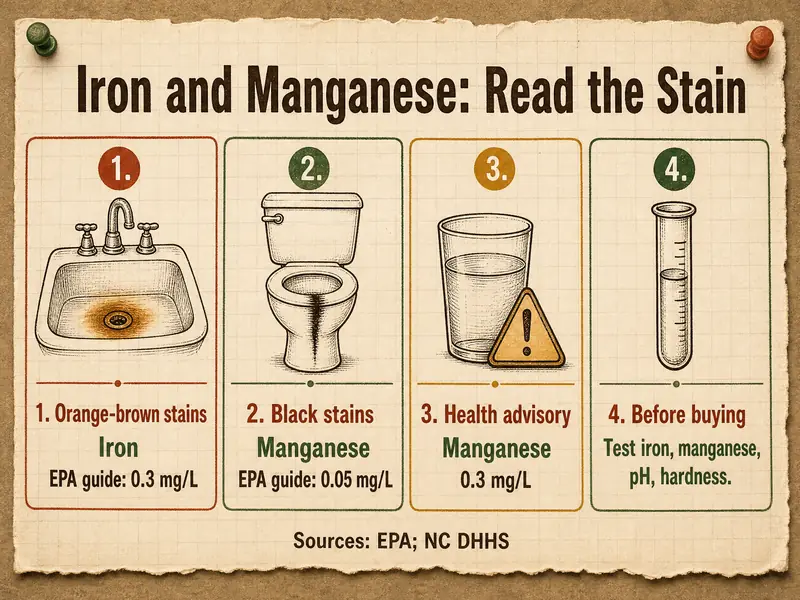
Iron and manganese in well water leave orange-brown and black stains above EPA's 0.3 and 0.05 mg/L guides; manganese also has a 0.3 mg/L health advisory, so a lab test comes before any filter.
Compiled by the Red Clay Septic & Well desk · Last revised
Ownership note. Red Clay Septic & Well has the same owners as two water-treatment stores, SoftPro Water Systems and Quality Water Treatment. Links on this page to either store go to equipment that store sells. Treatment advice here follows NC DHHS, NC State Extension and EPA guidance checked in October 2026; what a product listing says is the store's own claim, not a test by this site. More on ownership
In these notes
- Why is there iron and manganese in well water here?
- What levels of iron and manganese cause problems?
- Is manganese in well water a health concern?
- How do iron filters for well water work?
- Can a water softener remove iron and manganese?
- What should you test before buying an iron filter?
- Questions worth asking
The short version
- EPA's secondary (aesthetic) guides are 0.3 mg/L for iron and 0.05 mg/L for manganese (EPA).
- Manganese also has a 0.3 mg/L lifetime health advisory from EPA, which NC DHHS uses for private wells.
- NC DHHS found Piedmont counties had the highest average manganese, with 24% of sampled wells above 0.05 mg/L.
- Penn State Extension recommends a softener for iron only when pH is above 6.7 and dissolved iron is under 5 mg/L.
- Birm-type filters need pH of at least 6.8 for iron and 7.5 for manganese, a problem on many low-pH Piedmont wells.
- Durham County lists its inorganic well test (metals, pH and hardness) at $135 (form rev 08/2025; fees change).
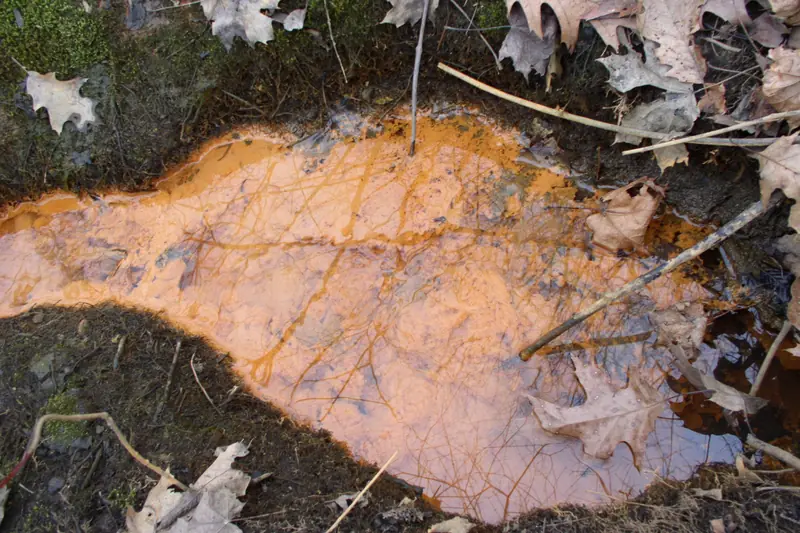
Orange rings in the toilet, rust on the driveway where the sprinkler hits, black specks in the dishwasher: those are the usual first signs. Iron and manganese are common in wells drilled into the rock under Durham, Orange, Person, Granville and Chatham counties, and both are treatable. The order matters, though. Test first, then pick equipment sized to the numbers.
Why is there iron and manganese in well water here?
Iron and manganese come from the rock and soil the groundwater moves through, and the low-oxygen water deep in a drilled well keeps them dissolved until they reach air. The NC Geological Survey notes that private wells in parts of the state sit in rock units with "naturally occurring groundwater contaminants," and lists manganese among them (NC DEQ).
The numbers bear that out locally. A USGS study of Piedmont aquifers found 8.3% of samples from crystalline-rock aquifers and 3.0% from the Triassic (Early Mesozoic) basin aquifers above 300 µg/L of manganese. In an older USGS survey of Orange County wells, manganese exceeded the standard in 12 of 51 analyses and iron in 3 of 51.
Penn State Extension explains why fresh well water often looks clear at first: dissolved iron and manganese are most common in groundwater with a pH under 7.0, and the orange-brown or black particles appear once the water meets oxygen (Penn State Extension). Granite and slate-belt wells in this area tend toward that lower pH, so the two problems often travel together.
What levels of iron and manganese cause problems?
Staining and taste start at about 0.3 mg/L of iron and 0.05 mg/L of manganese, the EPA secondary guides. EPA's table describes iron above that level as causing "reddish or orange staining" and a metallic taste, and manganese as causing black to brown color, black staining and a bitter metallic taste.
These guides are aesthetic, not enforceable, and EPA does not regulate private wells at all. They are still useful targets: a filter that brings water under 0.3 and 0.05 mg/L should stop most new stains.
Iron has one more NC number worth knowing. NC DEQ calculated a health-based value of 2.5 mg/L for iron in 2017, far above the staining level. NC DHHS uses that 2.5 mg/L figure when it reports how many wells "exceeded" for iron, so a well can be well under it and still stain every fixture.
Is manganese in well water a health concern?
At high enough levels, yes, which is why manganese has a second number. EPA set a lifetime health advisory of 0.3 mg/L to protect against neurological effects, and for infants under 6 months recommends using that same 0.3 mg/L even for a 10-day exposure (EPA health advisory report).
NC DHHS uses EPA's 0.3 mg/L advisory and the 0.05 mg/L aesthetic standard side by side, and keeps them separate (NC DHHS manganese sheet). The same sheet says Piedmont counties had the highest average manganese, 0.09 mg/L, with 24% of wells above the aesthetic standard, and that most NC wells have no risk of exceeding the 0.3 mg/L advisory.
So a result between 0.05 and 0.3 mg/L is mainly a staining and taste problem. A result above 0.3 mg/L is the one to treat at the tap your household drinks from, and to retest after treatment. If a baby's formula is mixed with well water, that result deserves quick attention.
How do iron filters for well water work?
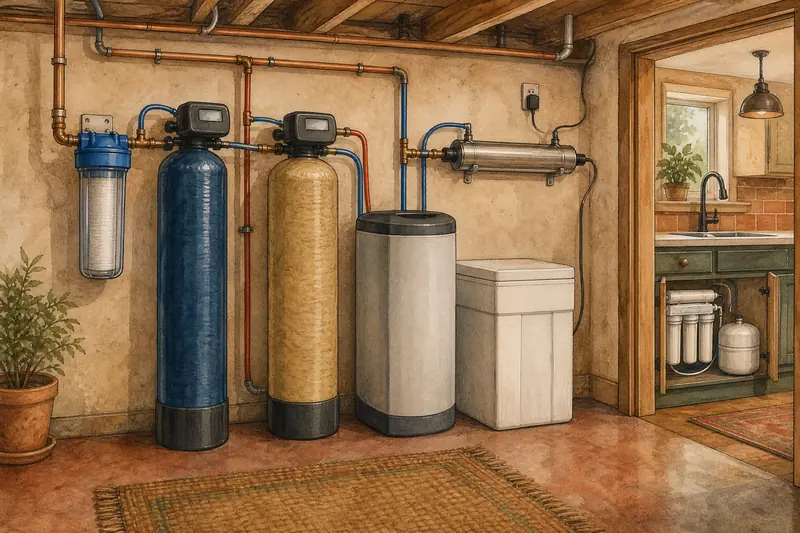
Most whole-house iron filters oxidize dissolved iron and manganese into particles, trap them in a media bed, and flush them out by backwashing. The differences are in how they oxidize and what water they tolerate. Penn State Extension gives working ranges for each type, summarized below.
| Method | Where it fits | Catch |
|---|---|---|
| Water softener | pH above 6.7, hardness 3-20 gpg, dissolved iron under 5 mg/L | Oxidized iron fouls the resin |
| Polyphosphate feed | Dissolved iron under 2 mg/L | Hides iron rather than removing it; weak on manganese |
| Catalytic carbon | Dissolved iron under 1.0 mg/L | Needs at least 4.0 mg/L dissolved oxygen |
| Birm with air | pH 6.8+ for iron, 7.5+ for manganese | Needs dissolved oxygen in the water |
| Manganese greensand | Combined iron and manganese 3-10 mg/L | Regenerated with potassium permanganate, which is toxic |
| Chlorine oxidation plus filter | Combined iron and manganese above 10 mg/L | A chemical feed pump to maintain |
Air-injection filters, the common choice on private wells, pull air into the water ahead of the media tank to supply the oxygen the reaction needs. Penn State notes that aeration units require a filter that "must be backwashed," which is why pump flow rate matters when sizing one. Backwash water also needs a drain; NC State Extension says the discharge from a water treatment system's backwash should not be connected to the septic tank (NC State Extension). More on that on the septic care page.
Can a water softener remove iron and manganese?
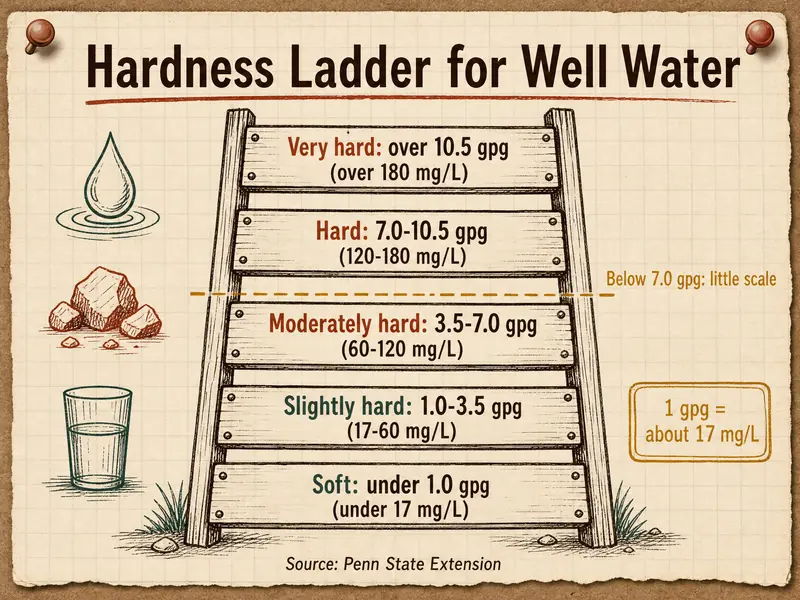
A softener can remove small amounts of dissolved iron and manganese, and NC DHHS lists cation exchange as one manganese option. Penn State is more specific: softeners are generally recommended for iron only when pH is above 6.7, hardness is 3 to 20 grains per gallon, and dissolved iron is under 5 mg/L.
The weak spot is oxidized iron. Penn State warns that oxidized forms "will foul the softener resin," so water that has already turned orange in the pressure tank is a job for an iron filter first. The well water softener page covers hardness, sizing and salt.
What should you test before buying an iron filter?
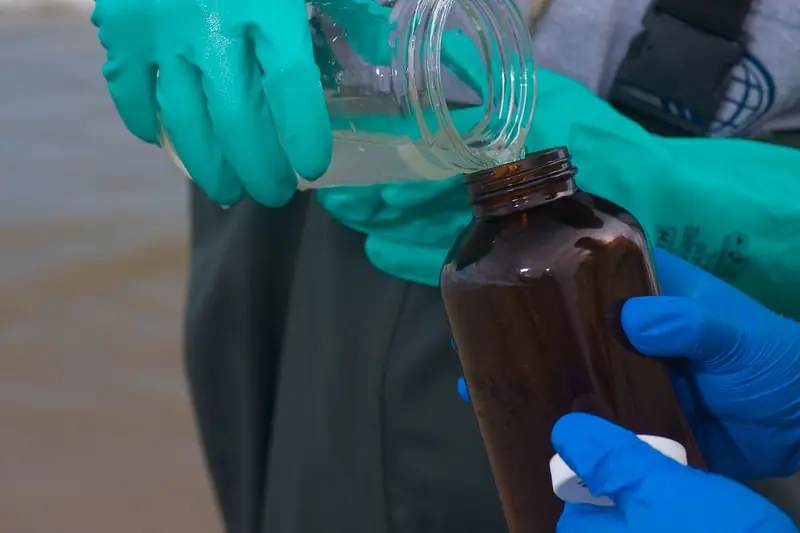
Test iron, manganese, pH and hardness at minimum, and ideally turbidity too. NC DHHS tells well owners to know total hardness, pH, iron and turbidity before installing any treatment, to get quotes from at least three companies, and to retest after installation (NC DHHS treatment guide).
pH decides more than people expect. A birm filter cannot do much for manganese below pH 7.5, so a low-pH well may need a neutralizer ahead of the iron filter; the acidic well water page explains that step. If slime or a swampy smell shows up in the toilet tank, ask for an iron bacteria test as well; Orange County lists one at $134 and says iron bacteria are not harmful to health but cause rusty, slimy buildup.
County health departments run these tests. Durham County Environmental Health lists its inorganic panel, which covers metals, pH and hardness, at $135 on its sample application (rev 08/2025). The well water testing page lists the other counties' tests and fees, and fees change, so confirm before sampling. One more number to have: your pump's flow rate in gallons per minute, because backwashing filters are sized to it.
Two iron filters sold by the stores linked here
Once a test shows iron or manganese above the guides, these are two options. SoftPro Water Systems describes its AIO Iron Master (sold by SoftPro Water Systems, which has the same owners as this site) as an air-injected filter using Katalox media; the store says it handles up to 30 ppm of iron along with manganese and hydrogen sulfide, and that its three sizes need a well pump of at least 5, 7 or 10 GPM to backwash. Quality Water Treatment lists the Fleck Terminator (sold by Quality Water Treatment, which has the same owners as this site), an air-injection filter loaded with birm; the store says it works only with a submersible pump, not a jet or booster pump, and needs a 5 or 7 GPM backwash rate depending on size.
Those are the stores' descriptions, not tests by this site. Neither filter treats bacteria, arsenic or nitrate. Given Penn State's pH limits for birm, check pH before choosing a birm unit for a manganese problem.
- 0.3 mg/LEPA secondary guide for iron (staining, taste)EPA
- 0.05 mg/LEPA secondary guide for manganese (black staining)EPA
- 0.3 mg/LEPA lifetime health advisory for manganese, used by NC DHHSNC DHHS
- 24%Piedmont wells above the 0.05 mg/L manganese standardNC DHHS
Where this comes from
This page draws on EPA's secondary standards table and manganese health advisory report, NC DHHS guidance on manganese, iron and choosing treatment, Penn State Extension's iron and manganese guide, USGS reports on Piedmont groundwater, NC State Extension's septic guide, and Durham and Orange county water-test forms, all checked in October 2026. Product details are each store's own listing. Left out: contractor price quotes, forum anecdotes and any lab testing by this site.
Questions worth asking
Why does my well water look clear but stain orange later?
Dissolved iron is invisible. It turns into orange-brown particles once it meets oxygen in a toilet tank, a glass or the air, which is why stains build up even when a fresh glass looks clean.
Is black sediment in well water always manganese?
Manganese is the most common cause of black staining and specks, according to EPA and NC DHHS. Black, greasy stains with a rotten-egg smell can also point to hydrogen sulfide, so a lab test settles it.
Does a polyphosphate feeder remove iron?
No. Penn State Extension says polyphosphate surrounds, or sequesters, dissolved iron under 2 mg/L rather than removing it, works poorly on manganese, and can release the iron again when it breaks down in a water heater.
Will an iron filter fix a rotten-egg smell too?
Some air-injection and oxidizing filters also treat hydrogen sulfide, and the stores describe their units that way. A smell only from hot water often comes from the water heater's anode rod instead, so check cold taps first.
How often should iron and manganese be retested?
NC DHHS suggests testing metals every two years. Retest sooner after installing a filter, to confirm it brings levels under 0.3 mg/L of iron and 0.05 mg/L of manganese.
Are iron bacteria a health risk?
Orange County's health department says iron bacteria are not harmful to health, but they cause rusty, slimy buildup in toilet tanks and can clog filters. The county offers a separate iron bacteria test for wells with that slime.
Read next
Filed under Well notes · septic and well notes for Durham