City water
Septic to Sewer in Durham: What Switching Takes
Septic to sewer in Durham takes a sewer line that can reach the lot, annexation if the house sits outside city limits, City fees, and a properly closed septic tank.
Compiled by the Red Clay Septic & Well desk · Last revised
In these notes
- How do you know if a Durham home is on septic or sewer?
- Can a septic home in Durham connect to city sewer?
- What fees come with a septic to sewer switch?
- Can the city or county require a sewer connection?
- What happens to the old septic tank?
- Is switching from septic to sewer worth it?
- Questions worth asking
Moving a house from a septic system to public sewer is a paperwork job before it is a digging job. The City of Durham decides who joins its sewer, Durham County decides how the old septic system is closed, and North Carolina law sets the outer rules. Red Clay Septic & Well is none of those offices; this page lays out what each one has published so a homeowner knows which questions to ask.
The short version
- Durham County Environmental Health keeps septic and well permits on file, and anyone may request a copy.
- Outside city limits, joining City sewer normally means a voluntary annexation petition and a Utility Extension Agreement, per the City's annexation page.
- A FY2024 study set the City's maximum cost-justified capacity fee per equivalent residential unit at $3,028.04 for sewer and $2,591.10 for water.
- Under G.S. 160A-317, a city may require connection for developed property inside its limits within a reasonable distance of a sewer line, with exemptions.
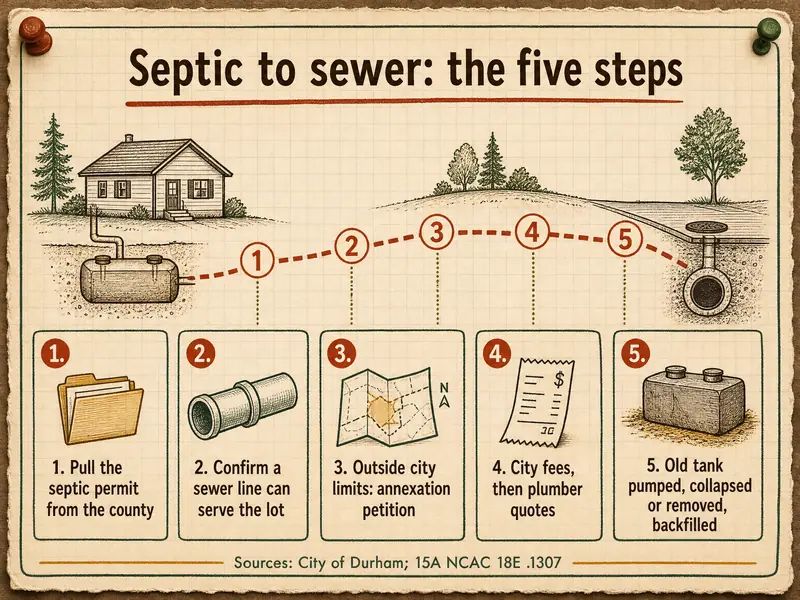
- 15A NCAC 18E .1307 requires an abandoned tank to be pumped by a permitted septage firm, then removed or collapsed and backfilled.
- The City's Northeast Creek cost-share program said in late 2025 that its funding would end in June 2026.
- $3,028.04Maximum cost-justified City sewer capacity fee per residential unit, FY2024 studyCity of Durham capital facility fee study
- $2,591.10Same study's maximum for a water connectionCity of Durham capital facility fee study
- 18 monthsTime allowed to finish a conversion after cost-share approvalCity of Durham Septic to Sewer Project
- 4 datesQuarterly days an annexation can take effect: Mar 31, Jun 30, Sep 30, Dec 31City of Durham Annexations
How do you know if a Durham home is on septic or sewer?
The surest way to know if a Durham home is on septic or sewer is to ask Durham County Environmental Health for the septic permit on file. The county's records page says anyone can request a copy, using the owner's name, the site address and, if known, the parcel number or PIN. A permit on file means a septic system was approved for the lot; the county permits and records page explains how the records are organized in each of the five counties.
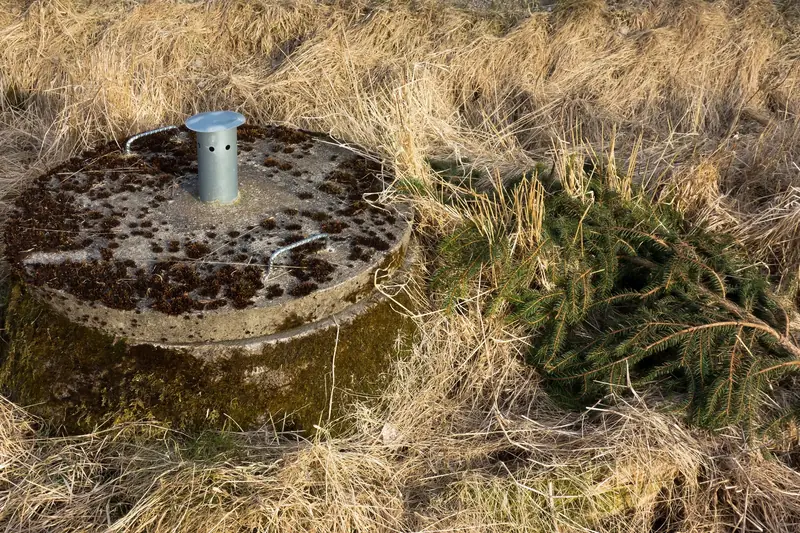
A City water bill is not proof of sewer; water and sewer are separate connections, and state law even treats them separately. A missing record does not settle it either: the NC real estate licensing board notes that a few counties did not keep septic records at first. On the ground, a tank lid or riser in the yard is a clue, and a septic inspection by a certified inspector will find the tank if it is there.
Can a septic home in Durham connect to city sewer?
A septic home in Durham can connect to City sewer when a sewer line is close enough to serve it and, for property outside city limits, after the City annexes the lot. The City's annexation page says landowners outside the limits "with well and septic tank problems" may seek to connect, and that petitions can be for land next to the city or for separate "satellite" areas.
The annexation route runs in order: a presubmittal meeting, the petition, a neighborhood meeting, staff review with a fiscal impact analysis, a planning hearing and a City Council hearing. During review, Public Works drafts a Utility Extension Agreement to bring lines to the site. Annexations take effect on one of four quarterly dates.
Location within the county also matters. Durham's development ordinance limits sewer extensions into the Rural Tier; one exception is serving an existing house where the county health department or the state has documented a health hazard (UDO Sec. 12.7). In the southeast of the county, some sewer lines belong to Durham County and flow to its Triangle Wastewater Treatment Plant, so the county, not the City, may be the utility to ask.
What fees come with a septic to sewer switch?
The fees in a septic to sewer switch fall into three groups: City charges, the Utility Extension Agreement, and the private work on the lot. The City's FY2024 capital facility fee study set the maximum cost-justified capacity fee for a typical home's connection at $3,028.04 for sewer ($1,013 for collection, $2,015 for treatment, rounded) and $2,591.10 for water. The study calls those maximums, and the fee the City actually adopts may be lower; check the current schedule.
The annexation page says the Utility Extension Agreement fee "must be paid separately," and it gives no amount. In the county's sewer areas in the southeast, system development fees go to Durham County instead.
Everything on private land is quoted by contractors: the building sewer from the house to the street and the tank closure. No government page sets those prices, so this site does not print a range. The state's real estate licensing board adds that even on a municipal system, the homeowner is typically responsible for the line from the street to the house.
For a few owners, the City has shared the cost. Its Septic to Sewer Project covered residential homes inside city limits and inside the Northeast Creek watershed with City sewer available, with extra hardship funds, and required the work within 18 months of approval. The page, as captured in November 2025, said funding would end in June 2026 and gave no dollar amount, so check with the City before counting on it.
Can the city or county require a sewer connection?
Yes, within limits set by state law. G.S. 160A-317 lets a city require the owner of developed property inside its limits, and within a reasonable distance of a sewer line, to connect. Two exemptions stand out: the system lacks capacity, or connecting would cost more than installing an on-site system, shown by a cost comparison from a licensed soil scientist, a certified on-site contractor or a licensed plumbing contractor.
Counties have a similar power under G.S. 153A-284, but may require a sewer connection only if the county has adequate capacity, and may charge an availability fee. The City's own code section on mandatory connection was not opened for this page, so read Durham City Code Chapter 70 or ask the City before relying on the details. Under the state law, a connected owner may keep a private well for uses other than drinking.
What happens to the old septic tank?
The old septic tank has to be closed under state rule 15A NCAC 18E .1307. A septage firm permitted under G.S. 130A-291.1 pumps out the contents; the tank is then removed, collapsed or otherwise made unable to hold liquid, and backfilled; and any pump, alarm or other electrical parts are switched off and above-ground parts taken away.
Durham County lists a Septic Tank Abandonment Form among its environmental health forms, so the county expects to hear about it. Pumping is the same job described on the septic tank pumping page. The rule does not mention the drainfield lines.
| Step | Who decides or does it | Published rule or page |
|---|---|---|
| Finding the septic permit | Durham County Environmental Health | County septic and well records page |
| Annexation and line extension | City of Durham Planning, Public Works, City Council | City annexation page; Utility Extension Agreement |
| Capacity fees | City of Durham, or Durham County in its sewer areas | FY2024 capital facility fee study |
| Required connection | City or county, within state limits | G.S. 160A-317; G.S. 153A-284 |
| Closing the tank | Permitted septage firm; county form | 15A NCAC 18E .1307 |
Is switching from septic to sewer worth it?
Switching from septic to sewer is worth it mainly when the septic system has failed or is close to it, the lot has no good repair area, and a sewer line is already near. A working system mostly needs periodic pumping and care, while a connection brings City fees, private plumbing and, outside the limits, annexation.
The hard cases are lots where clay or a high water table leaves no room for a repair. The septic repair page and drainfield page explain what the county looks at before approving a repair, and the red clay soil page covers why some Durham lots run out of options. When a repair permit looks doubtful and a sewer main runs along the street, the comparison shifts toward sewer.
Get the numbers in writing before deciding: the current City fees, the Utility Extension Agreement amount, contractor quotes for the line and tank closure, and the county's view of a repair. The City water section has the short version of what the City publishes.
Where this comes from
Sources here: the City of Durham's annexation and Septic to Sewer Project pages, its FY2024 capital facility fee study, the Unified Development Ordinance Sec. 12.7, G.S. 160A-317 and 153A-284, 15A NCAC 18E .1307, Durham County Environmental Health's records and forms pages, Durham County Utilities pages and a bulletin from the NC real estate licensing board, all checked in October 2026. City and statute pages were read from archived copies where the official sites blocked research access; the official addresses are linked. Left out: contractor price quotes, the City's adopted fee schedule (not available) and the City code's connection section (not opened).
Questions worth asking
Does Durham force homes on septic to hook up to sewer?
State law lets a city require connection for developed property inside its limits within a reasonable distance of a line, with cost and capacity exemptions. Whether and when the City applies that to a given street is a question for the City, not this site.
Can a house keep its well after connecting to sewer?
Sewer and water are separate. Under G.S. 160A-317(d), an owner connected to the city system may keep a private well for non-drinking uses such as irrigation.
Does the drainfield have to be dug up after switching to sewer?
18E .1307 speaks to the tanks and electrical parts, not the drainfield lines. The tank is pumped and removed or collapsed and backfilled; ask Durham County Environmental Health whether anything more applies on a given lot.
How long does annexation take in Durham?
The City lists the steps and says annexations take effect quarterly, on March 31, June 30, September 30 or December 31, but gives no fixed timeline. Two public hearings sit in the middle of the process.
Is the City's septic to sewer cost-share still open?
The City's page, as captured in November 2025, said funding would end in June 2026 and covered only the Northeast Creek watershed inside city limits. Check the City's Septic to Sewer Project page for its current status.
Who pays for the sewer line across the yard?
The owner, in most cases. The state's real estate licensing board says homeowners are typically responsible for the sewer line from the street to the house, and private plumbers quote that work.
Is a septic inspection worth getting before deciding?
It can be. A certified inspector's report on the tank, baffles and drainfield shows whether the system has years left or is near failure, which is the main question behind the decision.
Read next
Filed under City water · the front page of these Piedmont field notes